Basics of Radiative Forcing
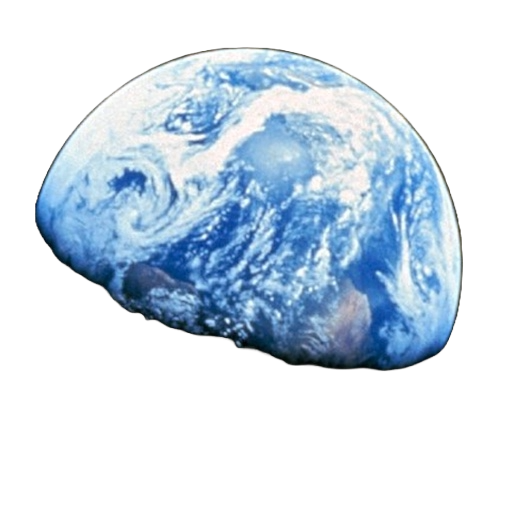
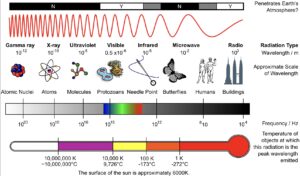
The temperature of the surface of the earth is essentially determined by two things: the amount of energy coming in from the sun and the amount of energy emitted out into space by the Earth and its atmosphere. (Interestingly, that hot molten core under the earth’s crust plays very little…

Common Climate Units
Climate change units can be confusing. Letters and numbers. Uppercase, lowercase, subscript. How to make sense of a weird agglomeration like GtCO₂e? As long as the article is well written and internally consistent, you may be able to glide right over them and still get the gist. But if you…
Basics of Greenhouse Gas Lifetimes
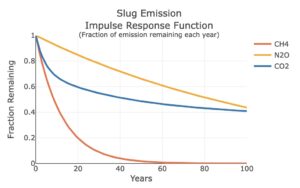
Breathe in. Breathe out. You just emitted about a sextillion (that’s a one with 21 zeros behind it) carbon dioxide molecules. In a thousand years 25 percent, or about 250 quintillion, of those molecules will still be floating around in the earth’s atmosphere. Once it is emitted, in other words,…
What a Difference a Metric Can Make
Note: Posts here, here, here, and here, discuss some of the different metrics like GWP, GTP, and GWP* that have been proposed for comparing the different greenhouse gases. If you aren’t already familiar with those metrics, you should probably read those posts first. Ever since the Kyoto Protocol was drafted…

More GWP*
If you haven’t seen them already, you may want to read this post about GWP and this post about GWP* first. So should we abandon GWP for methane emissions and begin using GWP* instead? That’s what many advocates for beef, dairy, and sheep have been arguing. It’s even found support…

What about GWP*?
If you haven’t read them already, you may want to read this post about GWP and this post about GTP first. Both Global Warming Potential (GWP) and Global Temperature Potential (GTP) were designed for a relatively straightforward goal: to enable the comparison between different greenhouse gases. For example, if someone…
Global Warming Potential or Global Temperature Potential
If you haven’t read it already, you may want to read this post about GWP first. From the moment it was created more than 30 years ago, climate scientists have known that the concept of Global Warming Potential had some major drawbacks. Since different greenhouse gases have different radiative efficiencies…

Understanding Global Warming Potential
Global warming potential, or GWP, is a ubiquitous metric in the climate world. It was invented more than 30 years ago to facilitate the comparison between different greenhouse gases and today it is commonly used in everything from carbon markets and offsets to international policy negotiations. Sometimes it may not…